Exploring Yaletown 2026: A Local Walking Guide in Vancouver
Yaletown is one of Vancouver’s most compact and walkable neighbourhoods. Once shaped by rail yards and warehouses, it has gradually transformed into a mix of heritage brick buildings, residential towers, cafés, and waterfront paths. Walking is the most natural way to experience Yaletown, allowing the area to reveal itself through small details rather than major landmarks.
This guide is designed for visitors and locals who want to explore Yaletown on foot, without a fixed agenda or rushed itinerary.
Walking through Yaletown
Most walks begin near Yaletown’s historic core, where converted warehouses line short blocks and calm streets. Sidewalks are generous, intersections are frequent, and the neighbourhood feels easy to navigate even on a first visit. Yaletown also connects smoothly with downtown, making it a logical stop on a longer city walk.
As you move west and south, the atmosphere subtly changes. Brick façades give way to newer residential buildings, and the streets open toward the water. For travelers who prefer a bit of background context before walking, some visitors browse general city activities on platforms like GetYourGuide’s Vancouver overview to understand how neighbourhoods fit together, then explore Yaletown independently at street level.
What to see along the way
Heritage buildings and street details
Yaletown’s earlier history is visible in its architecture. Large industrial windows, preserved brick façades, and old loading areas can still be seen above ground-level businesses. Looking up while walking reveals details that are easy to miss at a faster pace.
Public spaces and local rhythm
Rather than major landmarks, Yaletown offers small public spaces and everyday scenes. Benches, pocket parks, and sidewalk seating encourage people to pause. Observing how locals move through these spaces is part of the walking experience.
Waterfront paths near False Creek
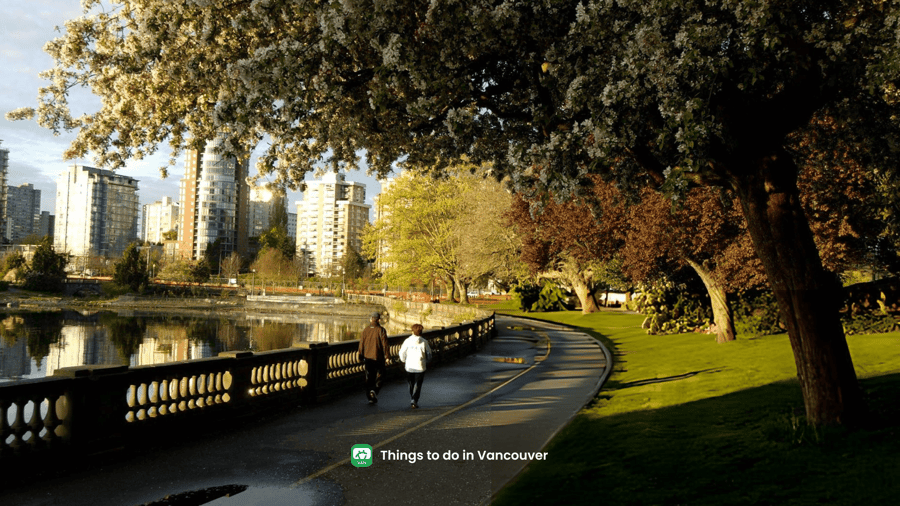
Walking downhill leads to the False Creek waterfront, where paths run alongside the water. This area connects with the Seawall and allows you to extend your walk beyond Yaletown if time and energy allow.
Food and cafés you may pass
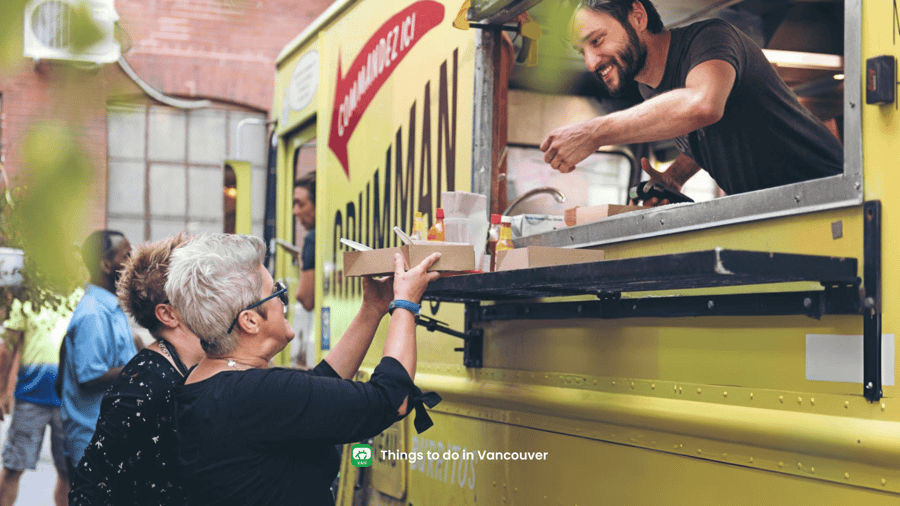
Food culture is woven naturally into walking in Yaletown. Cafés and casual restaurants often open directly onto the sidewalk, especially during warmer months. Instead of planning specific stops, many walkers choose to pause when something feels inviting, then continue on.
This flexible approach fits well with a relaxed Yaletown walking guide and keeps the experience unstructured.
When to walk Yaletown
Morning walks are quieter and suit those who prefer minimal crowds. Late morning to early afternoon offers a balanced atmosphere, while evenings feel more social as dining activity increases.
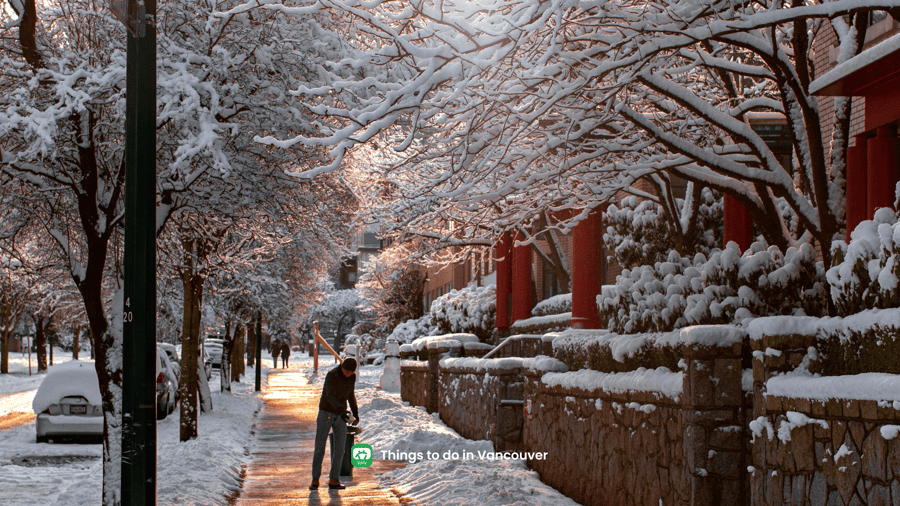
Spring through early fall is ideal for longer walks, especially near the water. In winter, Yaletown remains easy to walk, though shorter routes and weather-appropriate clothing are recommended.
Yaletown often fits naturally into broader downtown walks. For a wider walking context, you may find this downtown-focused guide useful in Get Your Guide.
Practical walking tips
Most walks through Yaletown take 30 to 60 minutes. The terrain is flat and well maintained, so standard walking shoes are sufficient. Weather near the water can change quickly, making a light jacket useful year-round.
Yaletown connects well with transit and nearby neighbourhoods, allowing you to combine it with a broader downtown route. For official information on walking routes, public spaces, and accessibility, the City of Vancouver website is a reliable reference.